
The Waiting Game and the Average Time for IRS to Approve Refund
How Long Does the IRS Take to Approve a Refund?

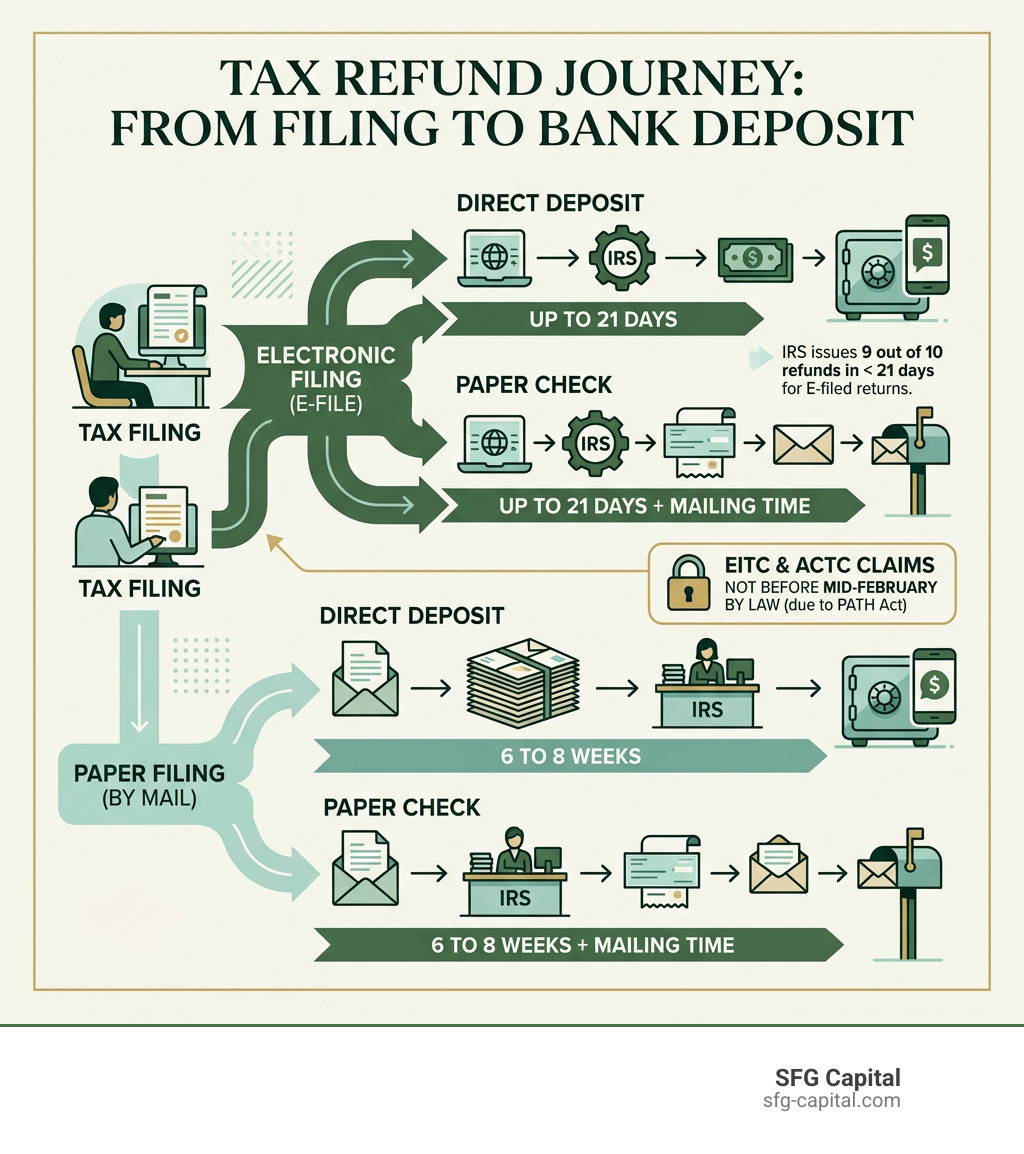
The average time for IRS to approve refund requests is 21 days or less for most taxpayers — but the exact timeline depends on how you filed and how you choose to receive your money.
Quick Answer:
| Filing Method | Refund Delivery Time |
|---|---|
| E-file + Direct Deposit | Up to 21 days (most under 3 weeks) |
| E-file + Paper Check | Up to 21 days + mailing time |
| Paper Return + Direct Deposit | 6 to 8 weeks |
| Paper Return + Paper Check | 6 to 8 weeks + mailing time |
| EITC or ACTC Claims | Not before mid-February by law |
Key stat: The IRS issues more than 9 out of 10 refunds in less than 21 days for e-filed returns.
For business owners waiting on an Employee Retention Credit (ERC) refund, the story is very different — timelines can stretch into months or longer due to IRS backlogs and added review requirements.
That waiting period is more than just frustrating. For businesses that need working capital now, every week of delay has a real cost.
I’m Santino Battaglieri, and as the founder of SFG Capital — where we’ve purchased and funded over $500 million in ERC claims — I’ve seen how unpredictable the average time for IRS to approve refund can be, especially for complex business claims. In this guide, I’ll break down exactly what drives those timelines and what your options are.
Understanding the Average Time for IRS to Approve Refund
When we talk about the average time for IRS to approve refund requests, we are looking at a system that handles over 140 million individual tax returns every year. For the vast majority of Americans, the process is surprisingly efficient. The IRS consistently reports that more than 9 out of 10 refunds are issued in less than 21 days. However, “issued” and “approved” are two different milestones in the tax journey.

The process typically follows three distinct stages that you can track:
- Return Received: This means the IRS has your tax return and it has entered their system. For e-filed returns, this usually happens within 24 to 48 hours of you hitting “submit.”
- Refund Approved: This is the “green light” stage. The IRS has finished processing your return and confirmed the refund amount. At this point, they are preparing to send the money to your bank or through the mail.
- Refund Sent: The money has left the IRS. If you chose direct deposit, it’s headed to your financial institution. If you chose a paper check, it’s in the hands of the U.S. Postal Service.
The most effective way to monitor this progress is the Where’s My Refund? tool. This tool is updated once every 24 hours, usually overnight. We always advise our clients not to check it multiple times a day—it won’t change until the next update cycle, and frequent checking won’t make the money arrive any faster!
Key Factors That Determine Your Refund Speed
While the 21-day window is the gold standard, several factors can shift your personal timeline. The most significant variable is how you file.
E-File vs. Paper Filing
If you are still mailing a paper tax return to the IRS, you are essentially choosing the slow lane. While an e-filed return is acknowledged almost instantly, a paper return can take four weeks just to show up in the tracking system. The average time for IRS to approve refund for paper filers is generally six to eight weeks, though during peak seasons or backlogs, it can take even longer.
| Feature | E-Filing | Paper Filing |
|---|---|---|
| Acceptance Time | 24–48 Hours | Up to 4 Weeks |
| Approval Window | Under 21 Days | 6–8 Weeks |
| Security | High (Encrypted) | Moderate (Physical Mail) |
| Accuracy | Higher (Built-in checks) | Lower (Manual entry) |
Direct Deposit vs. Paper Checks
Choosing direct deposit is the fastest and most secure way to get your money. The IRS issues 8 out of 10 refunds this way. It eliminates the “mailing time” which can add a week or more to your wait. Furthermore, paper checks can be lost, stolen, or returned as undeliverable, whereas direct deposit goes straight into your FDIC-insured bank or credit union account.
Why Refunds Take Longer Than 21 Days
Sometimes, even an e-filed return hits a snag. There are several common reasons why refunds take longer than 21 days:
- Math Errors: Simple calculation mistakes require manual review.
- Identity Verification: To combat fraud, the IRS may pull a return to verify that the person filing is actually who they say they are.
- Incomplete Information: Missing signatures or forgotten W-2 attachments are classic delay-starters.
- Security Filters: The IRS uses automated systems to flag potential fraud. If your return is flagged, a human must look at it, which adds time.
For business owners, specifically those dealing with the Employee Retention Credit, a different set of rules applies. If you’re waiting on a business credit, you might need to perform an ERC refund status check to see if your claim has hit a specific administrative roadblock.
Special Rules for Credits and Business Claims
Not all tax returns are treated equally. Certain tax credits and business forms are subject to federal laws that intentionally slow down the average time for IRS to approve refund.
The PATH Act (Protecting Americans from Tax Hikes Act) is a major factor here. This law requires the IRS to hold refunds for returns claiming the Earned Income Tax Credit (EITC) or the Additional Child Tax Credit (ACTC) until mid-February. This gives the IRS extra time to verify the claims and prevent fraudulent payouts.
Average Time for IRS to Approve Refund for EITC and ACTC
If you file your taxes in January and claim these credits, do not expect a refund in 21 days. By law, the IRS cannot issue these refunds before February 15. Even after that date, it takes time to process the massive volume of held returns. Most of these taxpayers see their money by the first week of March, provided they chose direct deposit and there are no other issues with the return.
Average Time for IRS to Approve Refund for Business Forms
For our business clients in Travis County and across the U.S., the wait times for business-specific forms can be significantly longer than for individual 1040s. The IRS is currently managing a massive backlog of amended returns and specialized tax credits.
- Form 1045 and 1139: These forms for tentative refunds can sometimes take months to process, with some IRS departments currently working through forms received as far back as late 2024 or 2025.
- Form SS-4: If you are applying for an EIN via paper, expect a 30-day wait, though faxing can shorten this to about 8 business days.
- ERC Claims: The ERC refund journey is perhaps the most complex. Due to a moratorium on processing new claims and high levels of scrutiny, understanding ERC refund delays is vital for business planning. We’ve seen ERC wait times and updates fluctuate wildly, and it’s important to know the ERC claim status meanings to determine if your business is stuck in a “manual review” or “identity verification” phase.
How to Track and Manage Your Expected Payment
Once you have filed, the best thing you can do is stay informed without obsessing. The IRS provides several tools to help you keep tabs on your money.
To use the Official IRS refund expectations tools, you will need three pieces of information:
- Your Social Security Number (SSN) or Individual Taxpayer Identification Number (ITIN).
- Your filing status (Single, Married Filing Jointly, etc.).
- The exact whole dollar amount of your refund as shown on your return.
Tracking Timelines
- E-filed returns: You can start checking 24 hours after filing.
- Prior-year e-filed returns: These take about 3 or 4 days to show up in the system.
- Paper returns: You’ll need to wait at least 4 weeks before the “Where’s My Refund?” tool will have any information for you.
After the IRS changes your status to “Approved,” it may still take 1 to 5 business days for your bank to process the direct deposit. If you are waiting on a paper check, the mail can add another 5 to 10 days depending on where you live in Travis County or the broader United States.
Frequently Asked Questions about IRS Refund Approval
When can I start checking my refund status?
For most taxpayers who e-file, the 24-hour rule applies. If you submitted your return on a Monday morning, you can usually see an update by Tuesday morning. If you filed a paper return, don’t even bother checking for at least a month. The TeleTax system (1-800-829-4477) is also available if you prefer to check by phone, but it follows the same update schedule as the website.
Why is my refund taking longer than 21 days?
If you’ve passed the three-week mark, your return likely hit a “manual review” trigger. This doesn’t necessarily mean you’re being audited. It could be a simple “mismatch” where the name on your return doesn’t exactly match the Social Security Administration’s records. For business owners, ERC processing timelines are almost always longer than 21 days because these claims require much deeper verification of payroll data and eligibility.
How do state tax refund timelines compare to federal refunds?
State refunds are handled by local agencies, such as the Department of Revenue in your specific state. These agencies operate independently of the IRS. While some states are faster than the federal government, others can take 8 to 12 weeks. Most states have their own “Where’s My Refund?” equivalent on their official government websites.
Conclusion
Navigating the average time for IRS to approve refund can feel like a test of patience, especially when your business or household budget depends on those funds. While the IRS manages to get most individual refunds out within 21 days, the reality for specialized business credits like the ERC is much more complicated.
At SFG Capital, we understand that for many businesses in Travis County and across Austin, TX, waiting months or even years for a refund isn’t an option. That’s why we specialize in helping businesses bypass these IRS delays. We offer ERC advances and buyout options, providing you with the capital you need today rather than tomorrow. Our performance-based fees mean we are as invested in the success of your claim as you are.
If you are tired of the waiting game, visit SFG Capital Services to see how we can help you turn your pending IRS refund into immediate working capital. Don’t let your business’s growth be dictated by the IRS’s processing speed—take control of your cash flow today.