
The Ultimate Guide to Navigating ERC IRS Guidelines Without Losing Your Mind
What the Employee Retention Credit Guidelines Actually Mean for Your Business
The employee retention credit guidelines can feel like reading a foreign language — but here’s the short version most business owners need:
Quick Answer: ERC Eligibility at a Glance
| Criteria | 2020 | 2021 (Q1–Q3) |
|---|---|---|
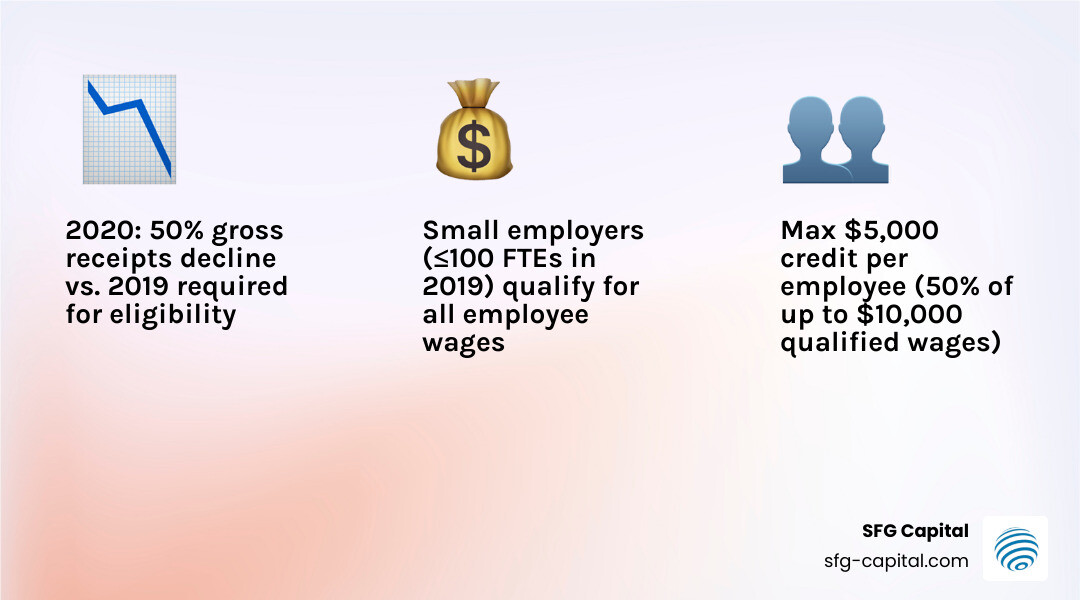
| Gross receipts decline required | >50% vs. same 2019 quarter | >20% vs. same 2019 quarter |
| Max credit per employee | $5,000 (full year) | $7,000 per quarter |
| Small employer threshold | ≤100 employees (2019) | ≤500 employees (2019) |
| Credit rate | 50% of qualified wages | 70% of qualified wages |
| Qualified wages cap | $10,000 per employee total | $10,000 per employee per quarter |
| Eligible period | March 13 – Dec 31, 2020 | Jan 1 – Sept 30, 2021 |
The ERC is a refundable tax credit created under the CARES Act in 2020. It was designed to help businesses keep workers on payroll during COVID-19 disruptions. It’s not a loan. If the credit exceeds what you owe in employment taxes, the IRS refunds the difference.
The rules changed multiple times — through the Consolidated Appropriations Act, the American Rescue Plan, and other legislation — which is exactly why so many business owners are confused, overwhelmed, or worried they claimed the wrong amount.
The IRS has flagged hundreds of thousands of potentially improper claims and is currently processing around 400,000 ERC claims worth roughly $10 billion. That’s not a reason to panic — but it is a reason to get the details right.
I’m Santino Battaglieri, and through SFG Capital I’ve helped evaluate and fund over $500 million in ERC claims, giving me deep, hands-on experience with employee retention credit guidelines across a wide range of industries and business structures. In this guide, I’ll walk you through everything you need to know — eligibility rules, credit calculations, PPP coordination, audit risks, and how to protect yourself — without the legal jargon.
Core Employee Retention Credit Guidelines for Eligibility

To qualify for the ERC, your business or tax-exempt organization must have carried on a trade or business during the 2020 or 2021 calendar years. While that sounds simple, the employee retention credit guidelines specify two primary ways to qualify: you either experienced a “full or partial suspension” of operations due to a government order, or you saw a “significant decline in gross receipts.”
For tax-exempt organizations, the IRS treats all operations as a trade or business for ERC purposes. However, it’s important to note that state and local governments generally do not qualify, and neither do household employers. If you are unsure where you stand, we recommend starting with The Essential Guide to ERC Eligibility Requirements to see if your specific situation fits the mold.
The IRS also provides an IRS Employee Retention Credit Eligibility Checklist to help you self-assess. Eligibility is determined on a quarterly basis. You might qualify for one quarter in 2020 but not for the next, depending on how the pandemic impacted your specific operations or revenue.
Defining Full or Partial Suspension Under Employee Retention Credit Guidelines
A “full or partial suspension” occurs when a government order (federal, state, or local) limits commerce, travel, or group meetings due to COVID-19 in a way that affects your business operations.
But here is the catch: a voluntary closure doesn’t count. The suspension must be a direct result of an official order. A “partial suspension” is often defined by the “nominal portion” rule. According to IRS Notice 2021-49 regarding qualified wages, an operation is considered more than nominal if it accounted for at least 10% of your total gross receipts or 10% of total employee service hours in 2019.
Common examples of partial suspension include:
- A restaurant forced to close its dining room but allowed to continue carry-out services.
- A retail store required to limit the number of customers allowed inside at one time.
- A business unable to obtain critical inventory because its primary supplier was shut down by a government order.
If your employees were able to continue comparable operations via telework, you generally won’t qualify under the suspension test. However, if your physical location was essential to the work (like a gym or a manufacturing plant), telework isn’t a “comparable” substitute.
Calculating a Significant Decline in Gross Receipts
If you didn’t have a government-ordered shutdown, you can still qualify through the numbers. The thresholds for what counts as a “significant decline” shifted between 2020 and 2021.
For 2020, the decline begins in the first quarter where gross receipts are less than 50% of the gross receipts for the same quarter in 2019. Eligibility ends in the quarter after your receipts recover to more than 80% of that 2019 level.
For 2021, the bar is much lower. You only need a 20% decline (meaning receipts are less than 80% of the same 2019 quarter). You can also use the “alternative quarter election,” which allows you to look at the immediately preceding quarter to determine eligibility. For a deeper dive into these calculations, check out our guide on Are You Eligible: Decoding ERC Refund Requirements.
Qualified Wages and Maximum Credit Amounts
Qualified wages are the foundation of your claim, but the employee retention credit guidelines differ based on how many people you employed in 2019. This “small vs. large employer” distinction is one of the most common areas where mistakes happen.
| Feature | Small Employer (2019) | Large Employer (2019) |
|---|---|---|
| 2020 Threshold | 100 or fewer full-time employees | More than 100 full-time employees |
| 2021 Threshold | 500 or fewer full-time employees | More than 500 full-time employees |
| What Wages Count? | All wages paid during the eligible period | Only wages paid to employees not providing services |
For small employers, the credit is straightforward: if you are eligible, every dollar you pay an employee (up to the cap) counts. For large employers, you can only claim wages paid to staff for time they were not working. If you’re still asking What is ERC?, just think of it as a reward for keeping people on the payroll even when business was slow or stopped.
Aggregation Rules and Controlled Groups
You can’t simply split your business into five different LLCs to bypass the 100- or 500-employee thresholds. Under the employee retention credit guidelines, “aggregation rules” apply. This means that businesses with common ownership or those part of a controlled group are treated as a single employer.
If you own multiple businesses, you must aggregate their employee counts and their gross receipts to determine eligibility. If the “single employer” group qualifies, then every member of that group is generally eligible. However, the credit must still be calculated and claimed by each individual entity. Understanding these ERC Qualifications and Requirements is vital to avoid over-claiming and triggering an audit.
Coordination with PPP and Avoiding ERC Scams
One of the biggest shifts in the employee retention credit guidelines happened in early 2021. Originally, if you took a Paycheck Protection Program (PPP) loan, you couldn’t claim the ERC. The law changed retroactively, allowing you to do both.
The catch? No double-dipping. You cannot use the same dollar of wages for both PPP loan forgiveness and an ERC claim. This requires a careful “surgical” calculation of your payroll to ensure you maximize both benefits without overlapping.
Because the potential payouts are so high, the market has been flooded with “ERC mills”—unscrupulous promoters who promise huge refunds for a massive upfront fee. The IRS has issued a warning on ERC scams and processing pauses, noting that many of these promoters ignore the actual guidelines. Before signing anything, ask yourself: Is Your ERC Contingency Fee a Fair Deal? If a promoter says “everyone qualifies,” run the other way.
How to Claim the Credit and Handle IRS Audits
Since the ERC is for wages already paid in 2020 and 2021, most businesses must claim it retroactively. This is done by filing Form 941-X, the Adjusted Employer’s Quarterly Federal Tax Return.
You generally have three years from the date the original return was filed to submit an amendment. This means the window is still open, but it is closing fast. Check our ERC Claim Deadline: What You Need to Know Now to ensure you don’t miss out.
If you realize you’ve filed an improper claim, don’t wait for the IRS to find you. The IRS Withdrawal Program for unprocessed claims allows you to retract a claim that hasn’t been paid yet, which can save you from massive penalties and interest.
Documentation Requirements for Employee Retention Credit Guidelines
If the IRS audits your claim, they will want to see more than just a spreadsheet. You need to substantiate your eligibility with hard evidence. We recommend keeping records for at least four years, including:
- Copies of the specific government orders that caused your suspension.
- Detailed payroll records showing exactly which wages were used for the ERC vs. PPP.
- Gross receipts calculations comparing 2019 to 2020/2021.
- Documentation of how you determined your “large” or “small” employer status.
With the IRS currently processing 400,000 claims, the wait times can be long. You might be wondering How Long Until Your ERC Refund Arrives? While the IRS is moving through the backlog, having perfect documentation is the best way to ensure your refund isn’t delayed further by a request for more information.
Frequently Asked Questions about ERC Guidelines
Can I still claim the ERC if I received a PPP loan?
Yes! As mentioned earlier, the law was changed to allow businesses to benefit from both programs. The key is coordination. You must ensure that the wages you used to justify your PPP forgiveness are not the same wages you are using to claim the ERC. For a full breakdown of how these two interact, read The ERC Explained: Everything You Need to Know.
What should I do if I submitted an ineligible ERC claim?
If you’ve already received the money and realize you weren’t actually eligible, the IRS has opened a second ERC Voluntary Disclosure Program. This program allows you to pay back the credit (often at a discount) while avoiding the most severe penalties. If your claim is still pending, use the withdrawal program mentioned above.
How do the rules change for Recovery Startup Businesses?
“Recovery Startup Businesses” are a special category for companies that started after February 15, 2020. Even if you didn’t see a gross receipts decline or a government shutdown, you might qualify for the third and fourth quarters of 2021 if your average annual gross receipts are under $1 million. The credit is capped at $50,000 per quarter. You can find more details in the IRS guidance on startup recovery businesses.
Conclusion: Securing Your Refund Safely
The employee retention credit guidelines are undeniably complex, but for businesses in Austin and throughout Travis County, the potential refund is too significant to ignore. However, with the IRS moratorium and the surge in audits, navigating this path alone is risky.
At SFG Capital, we specialize in helping businesses bypass the long IRS wait times. We offer ERC advances and buyouts, giving you quick access to your funds based on the strength of your claim. Our performance-based fee structure means we are incentivized to get the details right and ensure your claim is fully compliant with all IRS standards.
If you are tired of waiting on the IRS or are worried about the complexities of the filing process, we’re here to help. Explore more info about SFG Capital services and let us help you secure your refund safely and efficiently.