
Understanding Your ERTC Refund: The Flexible Funding You’ve Been Waiting For
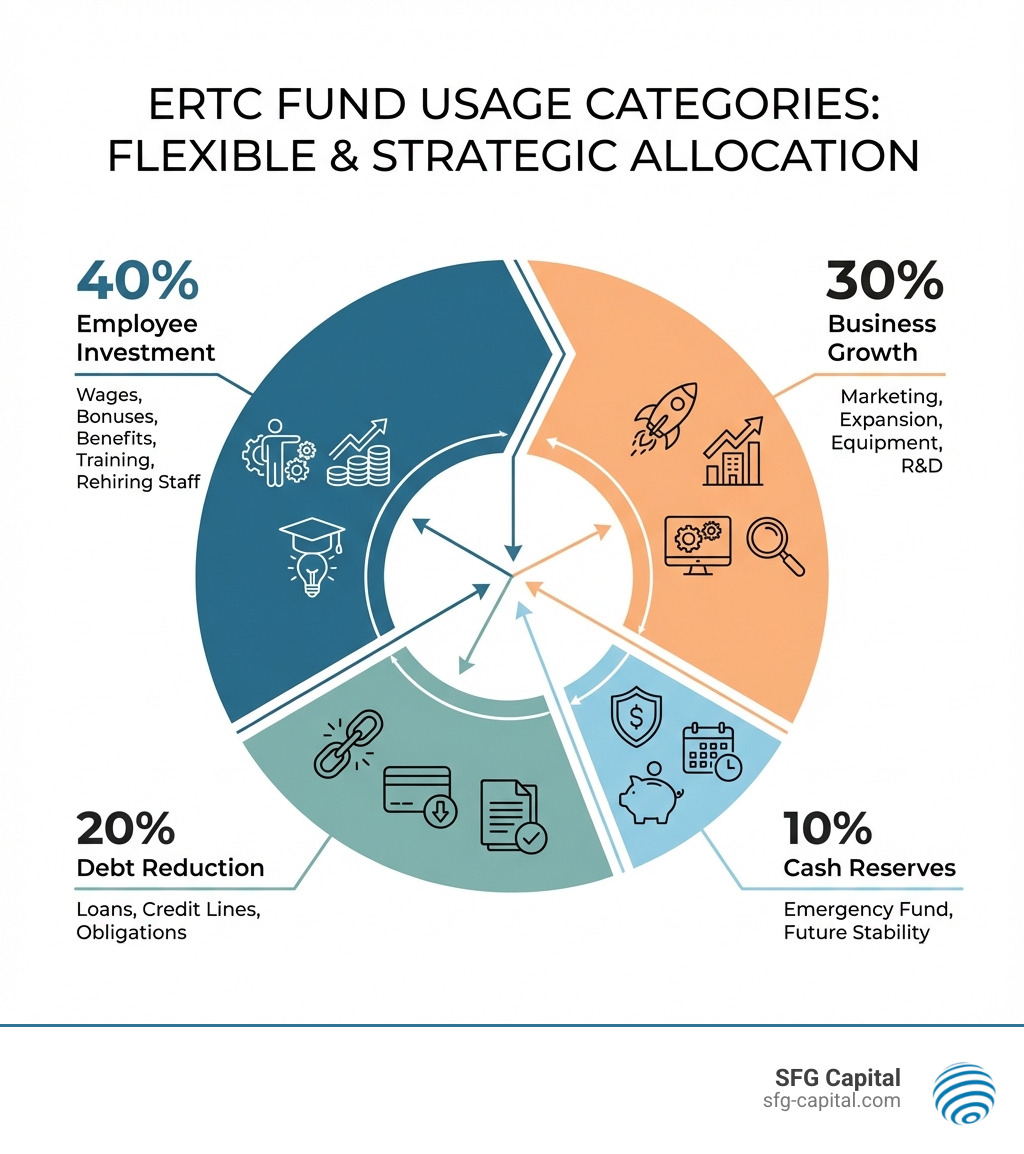
What can ERTC funds be used for? The Employee Retention Tax Credit (ERTC) funds have no restrictions on how they can be spent. Unlike forgivable loans such as the Paycheck Protection Program (PPP), ERTC is a refundable tax credit—essentially a refund of payroll taxes you overpaid. This means you can use these funds for:
- Employee investments – wages, bonuses, benefits, training, rehiring staff
- Business expansion – marketing, new products/services, equipment, real estate
- Debt reduction – paying off loans, credit lines, or other business obligations
- Operational expenses – rent, utilities, inventory, or any business costs
- Emergency reserves – building a cash cushion for future uncertainties
The government cannot dictate how you spend ERTC funds because they represent money that was already yours—you simply overpaid in payroll taxes during the pandemic. This is fundamentally different from loan programs that came with strict spending requirements.
Many businesses received substantial refunds—up to $26,000 per employee for 2020-2021. That’s potentially hundreds of thousands of dollars for mid-sized companies. But here’s the challenge: IRS processing times have often stretched 6-9 months or longer, leaving eligible businesses in limbo while they wait for funds they’ve already earned.
As Santino Battaglieri, we’ve guided businesses through over $500 million in ERTC claims at SFG Capital, helping them understand what can ERTC funds be used for and how to access these funds faster than standard IRS timelines. The key is making strategic decisions about fund usage before your refund arrives—so you’re ready to act the moment capital becomes available.
First, A Quick Refresher on the Employee Retention Tax Credit (ERTC)
The Employee Retention Tax Credit (ERTC), sometimes referred to as ERC, was a cornerstone of the federal government’s pandemic relief efforts. Enacted under the CARES Act, it was designed to encourage businesses to keep employees on their payrolls during the unprecedented economic disruptions of 2020 and 2021.
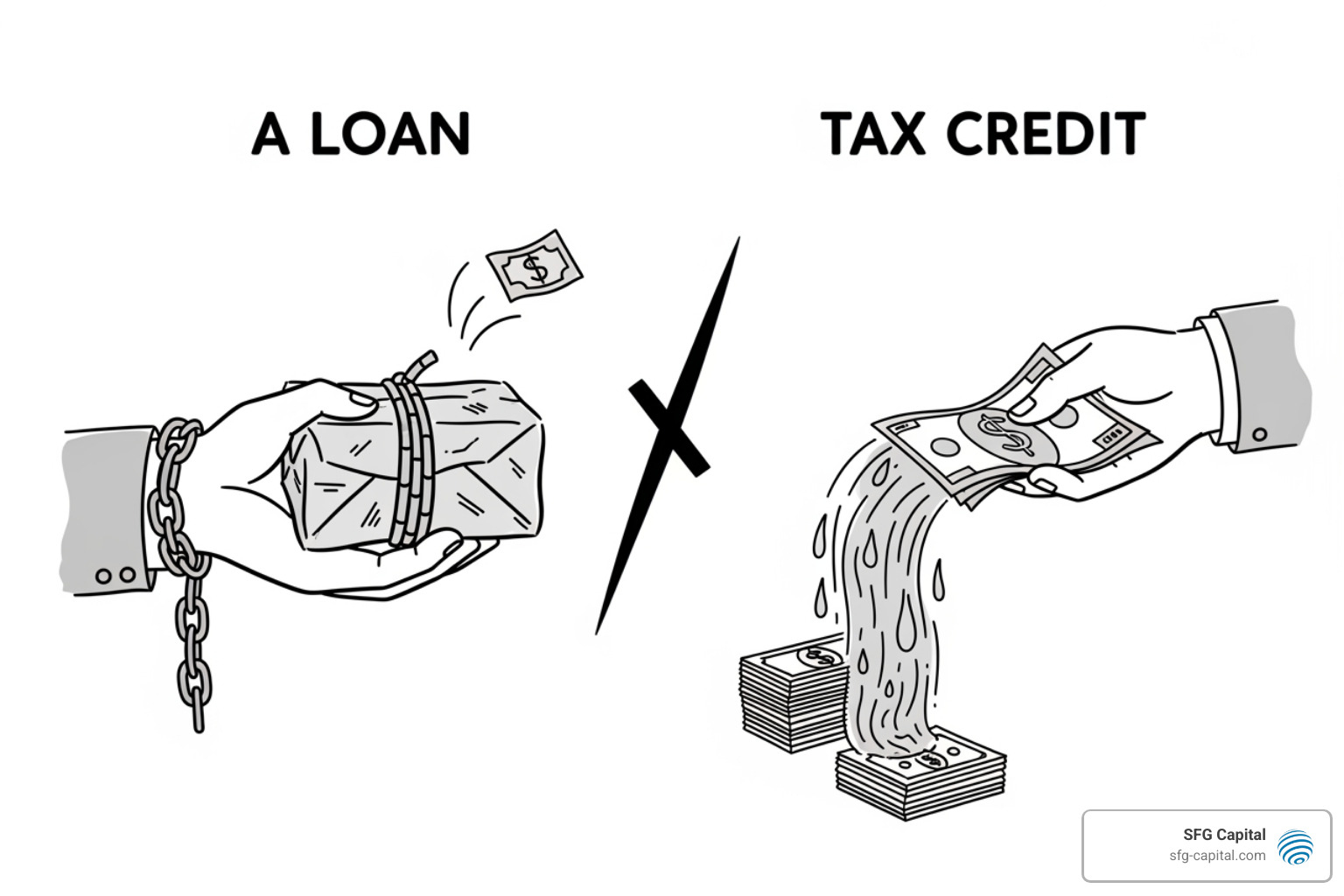
Unlike a loan, which requires repayment, the ERTC is a refundable payroll tax credit. This means it directly reduces your business’s payroll tax liability, and if the credit exceeds the taxes owed, the difference is refunded to you. It’s essentially money you “overpaid” in payroll taxes during a challenging period, now being returned to your business.
Understanding ERTC Eligibility
Determining eligibility for the ERTC can be complex, as the rules evolved throughout the pandemic. Generally, businesses in Travis County, TX, and across the U.S. could qualify if they experienced one of two main scenarios during 2020 or 2021:
- Significant Decline in Gross Receipts: Your business experienced a significant reduction in gross receipts compared to a corresponding quarter in 2019. For 2020, this meant a 50% or more decline, and for 2021, it was a 20% or more decline.
- Government-Ordered Suspension: Your business operations were fully or partially suspended due to a government order limiting commerce, travel, or group meetings due to COVID-19. This includes orders from federal, state, or local authorities that restricted your ability to operate in a normal capacity.
These rules varied between 2020 and 2021, and careful analysis is required. The IRS provides an Employee Retention Credit Eligibility Checklist to help businesses steer these criteria. Even if your business received a Paycheck Protection Program (PPP) loan, you might still be eligible for the ERTC for wages not covered by the forgiven PPP funds.
Why ERTC Funds Have No Spending Restrictions
One of the most appealing aspects of the ERTC, and why so many businesses are eager to understand what can ERTC funds be used for, is the remarkable lack of spending restrictions. This is a crucial distinction that sets it apart from other pandemic relief programs like the PPP.
The reason is fundamental: the ERTC is a tax credit, not a loan. When your business receives an ERTC refund, it’s not new money being granted with strings attached. Instead, it’s the return of funds your business already paid into the federal system through payroll taxes. Think of it as a refund check from the government for money that was technically yours all along, but temporarily held.
Because these funds are considered your business’s capital, the government has no legal standing to dictate how you spend them. This means once the ERTC funds hit your bank account, you have complete flexibility to allocate them in ways that best serve your business’s needs and strategic goals. Whether you’re in Austin, Travis County, or anywhere else in the United States, this principle holds true. You’re free to use this financial boost to recover, stabilize, or grow, without bureaucratic problems.
What Can ERTC Funds Be Used For? 5 Strategic Ways to Reinvest
Receiving an ERTC refund can feel like hitting the jackpot, a well-deserved reward for navigating the challenges of the pandemic. But with great financial flexibility comes the opportunity for great strategic planning. Instead of just letting the funds sit, or spending them impulsively, we encourage businesses to think about how these funds can be reinvested to create lasting value.

A thoughtful reinvestment strategy can transform a temporary windfall into sustained growth and resilience. Let’s explore five strategic ways businesses can use their ERTC funds.
1. Invest in Your Most Valuable Asset: Your Employees
The ERTC was, at its core, about retaining employees. So, it makes perfect sense to channel a portion of your refund back into the people who make your business run. Investing in your team can boost morale, improve productivity, and significantly reduce turnover—a critical factor for businesses in Travis County and beyond.
- Increasing Wages: A direct way to show appreciation and improve employee satisfaction is by increasing current employee wages. This can improve retention, especially in competitive job markets.
- Cash Bonuses: Consider offering cash bonuses as a direct reward for their loyalty and hard work during difficult times. This can be a powerful motivator.
- Rehiring Downsized Staff: If your business had to make the difficult decision to downsize during the pandemic, using ERTC funds to rehire those valuable employees can rebuild your team and restore lost institutional knowledge.
- Improving Benefits Packages: Improve health insurance, retirement contributions, or other employee benefits to attract new talent and retain existing staff.
- Paid Vacation Time: Offering additional paid time off can be a highly valued perk that contributes to employee well-being and reduces burnout.
- Training and Continuing Education: Invest in professional development, workshops, or certifications for your employees. This not only upskills your workforce but also shows a commitment to their growth, fostering loyalty.
2. Fuel Your Growth Engine with Business Expansion
Many businesses were forced to put growth plans on hold during the pandemic. ERTC funds provide a unique opportunity to reignite those ambitions and position your business for future success.
- Increasing Your Marketing Budget: Attract new clients or customers by boosting your marketing efforts. This could include digital campaigns, local advertising in Austin, or expanding your outreach.
- Expanding or Upgrading Services/Product Offerings: Use the capital to diversify your offerings, develop new products, or improve existing services to meet evolving customer demands.
- Investing in Research and Development (R&D): Dedicate funds to innovation, exploring new technologies, or improving operational efficiency.
- Making Major Purchases: Acquire innovative technology, new equipment, or even real estate to support expansion. These investments can provide a competitive edge and may offer tax benefits.
- Acquiring a Related Business: For some, ERTC funds might enable the strategic acquisition of a complementary business, expanding market share or capabilities.
- Entering New Markets: Whether it’s breaking into an overseas market or simply expanding your reach within the United States, ERTC funds can provide the necessary capital for such ventures.
3. Strengthen Your Financial Foundation
The pandemic exposed vulnerabilities in many businesses’ financial structures. Using ERTC funds to fortify your financial foundation is a prudent and strategic choice, ensuring long-term stability and peace of mind.
- Tackle Debt: Pay off high-interest loans, lines of credit, or other business debt. Reducing debt can significantly improve your cash flow and financial health.
- Build a Cash Reserve/Emergency Fund: Create a “rainy day fund” to act as a buffer against future economic downturns, unexpected expenses, or market shifts. This provides critical liquidity and security.
- Safe Investments: Consider investing a portion of the funds in safe, liquid assets that can generate a modest return while remaining accessible.
Navigating ERTC Compliance, Risks, and Deadlines
While the flexibility of ERTC funds is a huge advantage, it’s crucial to remember that the path to claiming and receiving these funds involved navigating complex IRS regulations. The IRS has increased its scrutiny of ERTC claims due to a high number of improper applications, making compliance and accurate documentation more important than ever.
What can ERTC funds be used for if a claim is disallowed?
Even with the best intentions, an ERTC claim can sometimes be disallowed by the IRS. This can be a stressful situation, especially if you’ve already factored those funds into your business planning. If your ERTC claim is disallowed, your business will likely face:
- Repayment Obligations: You will be required to repay the disallowed credit amount.
- Penalties and Interest: The IRS may levy penalties and interest on the disallowed amount, calculated from the date the original payroll tax return was due.
- Wage Expense Deduction Adjustments: When you claim the ERTC, your business is required to reduce its wage expense deduction on its income tax return by the amount of the credit. If the ERTC claim is later disallowed, you’ll need to adjust your income tax return to reflect the re-deduction of those wages.
The good news is that the IRS has provided guidance on how to handle these adjustments. For instance, if your ERTC claim was disallowed and you had reduced your wage expense on a prior income tax return, you can increase your wage expense on your income tax return for the year the disallowance is finalized. This means you don’t necessarily need to amend past income tax returns, especially if the window for amendment has closed. You can find more detailed guidance on this process directly from the IRS: Adjusting Wage Expense for Disallowed ERC Claims.
How to Claim the ERTC and Avoid Common Pitfalls
The complexity of ERTC eligibility and calculations unfortunately led to a rise in scams and improper claims. Businesses in Travis County and across the U.S. should remain vigilant, as fraudulent actors may now target businesses with audit-related schemes.
- Beware of ERC Scams: Watch out for unsolicited advertisements, promoters promising “guaranteed” eligibility with quick, easy answers, or those charging large upfront fees based on a percentage of your refund. These were often red flags when claims were being filed, and similar scams may persist around audit defense. The IRS actively warns against these tactics.
- Importance of a Trusted Tax Professional: The ERTC was not a “one-size-fits-all” program. Eligibility hinged on specific facts and circumstances, which is why working with a reputable tax professional or expert was crucial. They could accurately assess your eligibility, calculate the credit, and prepare the necessary documentation.
- Retroactive Claims Process: Eligible businesses that didn’t claim the credit on their original employment tax returns had a window to do so retroactively. This typically involved preparing and submitting Form 941-X, the Adjusted Employer’s Quarterly Federal Tax Return. This form allowed for the correction of previously filed employment tax returns before the deadlines passed.
What are the retroactive deadlines for claiming the ERTC?
While the ERTC program officially ended, the window to claim the credit retroactively has closed. It is important to know what the deadlines were.
- For 2020 Claims: The deadline to file adjusted employment tax returns (like Form 941-X) for qualified wages paid in 2020 was April 15, 2024.
- For 2021 Claims: The deadline to file adjusted employment tax returns for qualified wages paid in 2021 was April 15, 2025.
These deadlines were based on the statute of limitations. Missing these dates meant forfeiting the opportunity to claim potentially significant funds. For more information on the program’s history, the IRS provides comprehensive guidance on the Employee Retention Credit.
Frequently Asked Questions About ERTC Fund Usage
We often hear similar questions from businesses as they plan for their ERTC refunds. Let’s address some of the most common ones.
Are there any tax implications for how I spend my ERTC funds?
No, there are generally no specific tax implications on how you spend your ERTC funds. Once the refund is in your business’s bank account, it’s treated as business capital. You won’t face additional taxes simply for using the funds to, say, upgrade equipment or give employee bonuses.
However, it’s crucial to understand a key tax rule related to claiming the ERTC: your business must reduce its wage expense deduction on its income tax return by the amount of the credit claimed. This is not about how you spend the refund, but how the credit itself affects your taxable income. If you claimed the ERTC, you would have already (or will need to) adjust your income tax return for the relevant years to reflect this reduced wage deduction. Consult with a tax professional to ensure proper income tax reporting.
Can I use ERTC funds to pay myself as the business owner?
Yes, generally, you can use ERTC funds to pay yourself as the business owner. Since the funds are unrestricted business capital, they can be distributed to owners in the same ways any other business profits or capital would be. This could be through:
- Owner’s Compensation: If you take a salary or owner’s draw, the ERTC funds can supplement this.
- Shareholder Distributions: For corporations, funds can be distributed to shareholders, including owner-shareholders.
- Business Capital for Personal Use: As with any business profits, funds can be taken out for personal use, subject to your business’s legal structure and normal tax laws (e.g., income tax on distributions).
There are no specific ERTC restrictions preventing you from using the funds for owner compensation or distributions. However, always ensure such actions comply with your business’s legal structure, operating agreements, and applicable tax laws.
What can ERTC funds be used for compared to other relief programs?
The ERTC stands out due to its unrestricted nature, especially when compared to other major pandemic relief programs. Here’s a quick comparison:
| Feature | ERTC (Employee Retention Tax Credit) | PPP (Paycheck Protection Program) | EIDL (Economic Injury Disaster Loan) |
|---|---|---|---|
| Type of Aid | Refundable Payroll Tax Credit | Forgivable Loan (if used correctly) | Loan |
| Fund Usage | Completely Unrestricted. Can be used for any business purpose. | Primarily for Payroll Costs (60%), Rent, Utilities, Interest. | Working Capital, Operating Expenses, Debt Payments. |
| Repayment | No repayment, it’s a credit/refund. | No repayment if forgiveness criteria met; otherwise, a loan. | Must be repaid with interest. |
| IRS Oversight | IRS monitors eligibility and claim accuracy. | SBA and lenders monitored use for forgiveness. | SBA monitors loan terms and repayment. |
| Benefit | Direct cash injection, reduces payroll tax burden, no debt incurred. | Kept employees on payroll, helped cover essential overhead. | Provided liquidity for businesses impacted by disaster. |
| Nature | Money already “overpaid” in taxes, returned to business. | Government-backed loan designed for specific pandemic expenses. | Low-interest loan for economic injury from disaster. |
This table clearly illustrates why understanding what can ERTC funds be used for is so important. The ERTC provides unparalleled flexibility, allowing businesses to address their most pressing needs or pursue strategic growth initiatives without external mandates.
Don’t Wait for the IRS: Open up Your ERTC Funds Now
We’ve explored the incredible flexibility and strategic potential of ERTC funds, from investing in your team and fueling growth to strengthening your financial foundation. However, the biggest hurdle for many eligible businesses in Travis County and across the U.S. remains the lengthy IRS processing times. Waiting 6-9 months or even longer for funds you’ve already earned can severely hamper your ability to act on these strategic opportunities.
This is where SFG Capital steps in. We understand that immediate access to capital can be the difference between stagnating and thriving. We specialize in helping businesses like yours bypass these frustrating IRS delays by offering advances or buyouts on your pending ERTC refunds.
Our process is straightforward: we provide you with a significant portion of your anticipated refund upfront, allowing you to access the capital you need today. Our fee is performance-based, meaning we only get paid when you do, aligning our success with yours. We handle the complexities of the ERTC claim process, ensuring expert assistance and expediting your access to these vital funds.
Don’t let government bureaucracy hold your business back. If you’re a business in Austin or anywhere in Travis County that has already filed for the ERTC and is waiting on a refund, we can help you turn that pending claim into immediate, actionable capital.