
Why Waiting for Your ERC Refund Could Be Costing Your Business
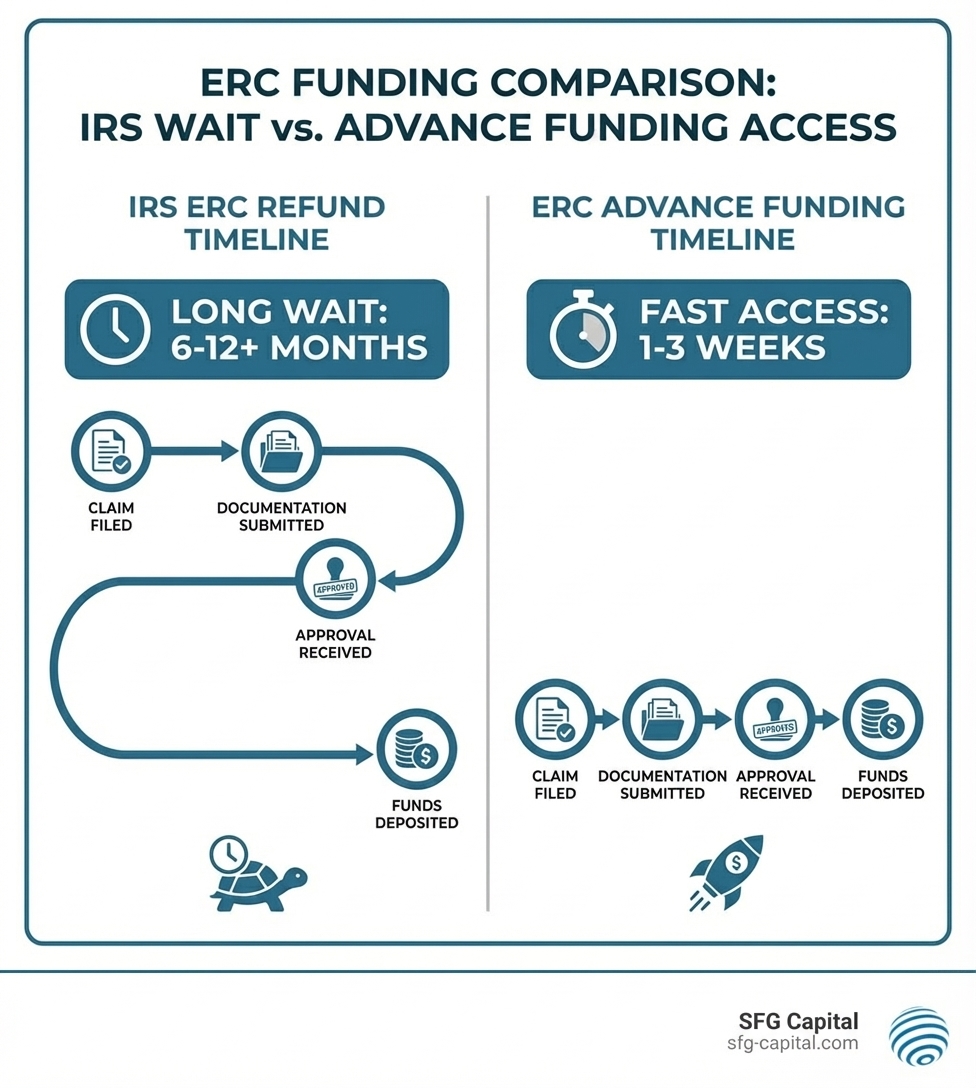
ERC advance funding allows eligible businesses to access a significant portion of their Employee Retention Credit refund in days or weeks, rather than waiting 6-12+ months for the IRS to process their claim.
Quick Answer: What is ERC Advance Funding?
- What it is: A service to get up to 85% of your expected ERC refund now
- How fast: Funds available in as little as 72 hours to 3 weeks
- How it works: Sell or borrow against your future IRS refund for a fee
- Who qualifies: Businesses with filed 941-X claims, no tax liens, and refunds over $75,000
- Cost: A one-time fee of 10-15% of the refund amount
The Employee Retention Credit was a lifeline for businesses affected by COVID-19. However, many are now struggling with cash flow while waiting 6-12+ months for the IRS to process their claims. This delay can mean missing growth opportunities, struggling with payroll, or taking on more debt. For many, the wait feels like the opposite of relief.
That’s where ERC advance funding comes in. This service allows you to access most of your refund immediately rather than waiting for the IRS’s lengthy processing timeline. Think of it as fast-tracking your own money so you can put it to work when you need it most.
I’m Santino Battaglieri, and I’ve spent years helping businesses steer complex funding solutions, including ERC advance funding strategies. At SFG Capital, we’ve purchased and funded over $500 million in ERC claims, helping businesses access their capital when timing matters most.
The ERC Waiting Game: Why Businesses Need a Faster Solution
The Employee Retention Credit (ERC) was a crucial refundable tax credit for businesses impacted during the COVID-19 pandemic, designed to help them keep employees on payroll.
To qualify for the ERC in 2020 and 2021, a business generally needed to meet one of two criteria:
- Government Shutdowns: A full or partial suspension of operations due to a government COVID-19 order.
- Gross Receipts Decline: A significant drop in gross receipts (50% in 2020, 20% in 2021) compared to 2019.
While the ERC offered substantial relief, the reality of claiming these funds has been fraught with delays.

The Problem of IRS Backlogs and Consequences of Delay
The IRS is overwhelmed by the volume of ERC claims, leading to significant backlogs. Wait times for refunds often stretch from 6 to 12 months or longer, creating critical cash flow challenges.
This delay can have severe consequences:
- Missed Growth Opportunities: Needing capital for new equipment or expansion, only to see opportunities pass by while waiting a year for your refund.
- Payroll Struggles: Waiting for a large refund can make meeting payroll difficult, potentially leading to layoffs or reduced hours.
- Mounting Debt: Businesses may take on high-interest loans or use personal funds to bridge the gap, increasing financial strain.
- Operational Shortfalls: Managing daily expenses like inventory or rent becomes difficult without the expected capital.
We believe businesses deserve to access the funds they’re owed in a timely manner. The long wait can be draining, which is why understanding options like ERC advance funding is so crucial. We’ve seen how expediting these funds can be a game-changer for businesses struggling with these delays.
For more information on navigating these challenges, you can explore our insights on Expediting Your ERC Refund: What You Need to Know.
Your Guide to ERC Advance Funding Services
ERC advance funding is a financial solution that provides immediate access to your anticipated Employee Retention Credit refund, bypassing the IRS’s long processing times. It acts as bridge financing, converting your future ERC claim into working capital in days or weeks, so your business can thrive now.
This type of service can be a powerful tool for Funding Growth: How ERC Can Power Your Business Forward.
How does ERC advance funding work?
The process involves borrowing against or selling a portion of your anticipated ERC refund. Here’s a typical breakdown:
- Application and Approval: Apply with your ERC claim documents. The provider evaluates your claim’s validity and business’s financial health.
- Offer and Agreement: If approved, you’ll receive an offer for an upfront percentage of your refund (often up to 85%), minus fees. It’s a purchase or advance, not a traditional loan.
- Secured by the Refund: The advance is secured by your future ERC check. The funding provider receives the IRS check directly when it’s issued.
- Immediate Working Capital: Once finalized, funds are deposited into your account, often within days or weeks, providing immediate working capital for any business need.
- Refund Collection: When the IRS issues the refund, it goes to the funding provider to cover the advance and fees. Any remaining balance is forwarded to your business.
This model lets businesses bypass the long IRS wait, turning a future asset into immediate liquidity. It’s a pragmatic solution for businesses in Travis County and beyond that can’t afford to wait for their funds.
ERC Advance Funding: How It Differs from Traditional Financing
ERC advance funding differs from a traditional business loan in its structure, requirements, and repayment. Here’s a comparison:
| Feature | ERC Advance Funding | Traditional Business Loan |
|---|---|---|
| Collateral | Secured by your anticipated ERC refund. | Secured by business assets, real estate, or personal guarantees. |
| Approval Speed | Fast, with funds in days to weeks, bypassing IRS delays. | Weeks to months, depending on loan type and lender. |
| Credit Score Impact | Less emphasis on credit history; the focus is on the ERC claim’s validity and size. | Heavily reliant on business and owner credit scores for approval and favorable terms. |
| Repayment Source | Repaid directly from the IRS refund check, not from business revenue. | Repaid with scheduled payments from business operating revenue. |
| Nature of Funds | A purchase of a future receivable or an advance, not traditional debt. | A debt instrument with a principal, interest rate, and repayment schedule. |
| Costs | A one-time fee or discount rate (e.g., 10-15%) taken from the advance or final refund. | Includes ongoing interest, origination fees, and other charges over the loan’s life. |
| Use of Funds | No restrictions; funds can be used for any business need. | May have restrictions depending on the loan type (e.g., for equipment only). |
| IRS Relation | Directly linked to the IRS refund; the provider collects the check. | Independent of the IRS refund; your business is responsible for repayment. |
This table highlights why ERC advance funding is a specialized solution custom to the unique circumstances of the Employee Retention Credit. It offers a distinct advantage for businesses that need to open up their capital quickly without incurring traditional debt obligations.
The Step-by-Step Process to Access Your Funds
Providers of ERC advance funding have streamlined their processes for efficiency, moving your business from application to cash in hand much faster than the IRS.
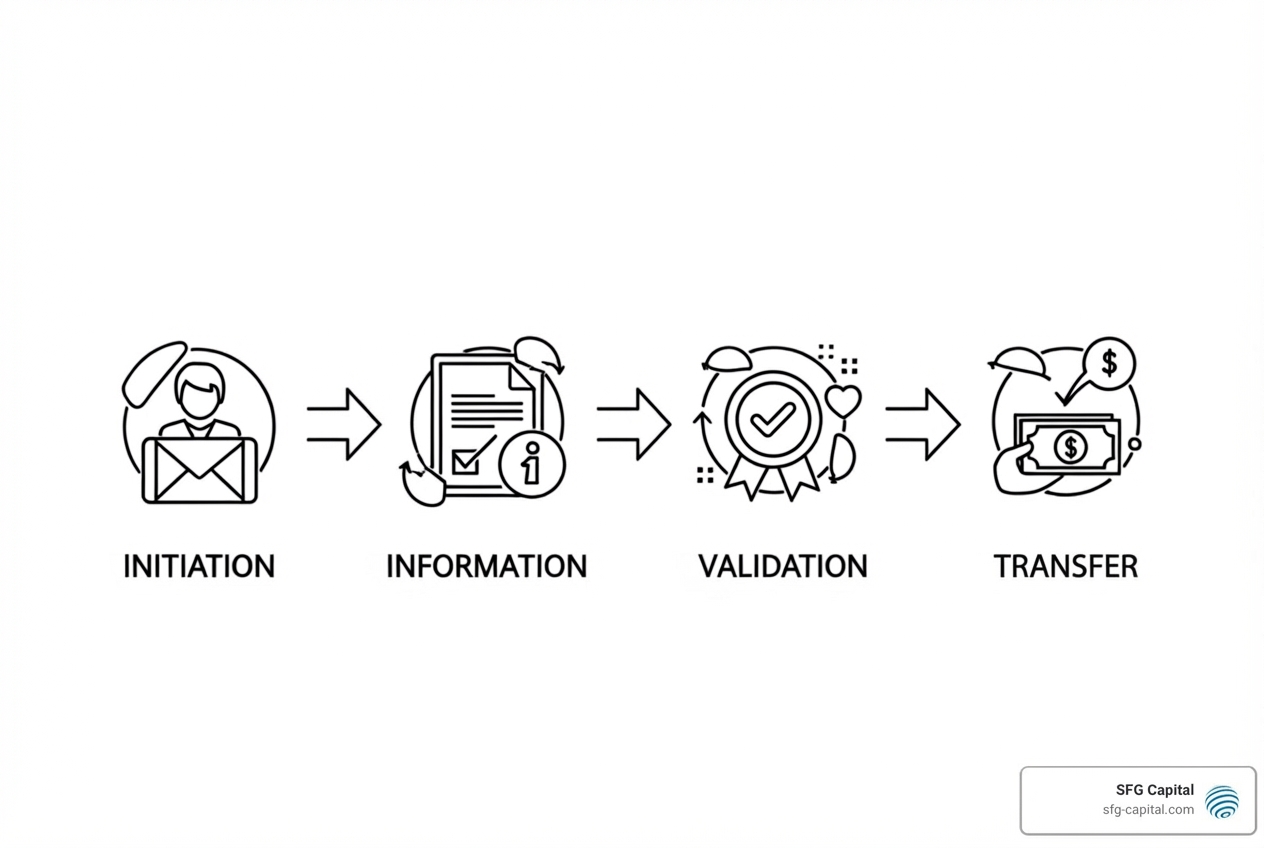
The general process is designed for a quick turnaround, often culminating in funding within days or a few weeks.
The Application and Approval Timeline
Here’s a typical breakdown of how businesses in Travis County and across the United States can access their ERC advance funding:
- Initial Application Submission: A quick online form with basic business and ERC claim details. Pre-approval can come in as little as 72 hours.
- Providing Required Documentation: After initial review, you’ll submit documents to verify your claim and business. Being responsive here is key to a fast process.
- Underwriting and Due Diligence by the Funder: The funder reviews your documents to assess the claim’s validity and refund amount, ensuring it meets their criteria.
- Receiving and Accepting the Term Sheet: If approved, you’ll get a term sheet detailing the advance amount, fees, and terms. Review it carefully and ask questions.
- Funding in as Little as a Few Days to Weeks: After accepting the terms, funds are transferred to your account. The full process can take from 72 hours to 3 weeks, depending on your responsiveness and the funder’s speed.
Our goal at SFG Capital is to make this process as smooth and transparent as possible, ensuring you get access to your capital when you need it most.
What Documentation Will You Need?
To ensure a smooth application process, have your documentation ready. Requirements vary, but here’s what is typically required:
- Form 941-X Filings: The amended payroll tax returns you filed to claim the ERC.
- ERC Calculation Report: The detailed report showing how your ERC amount was calculated.
- Business Tax Returns: Typically for the years 2019-2021.
- Profit & Loss (P&L) Statements: Usually for 2019-2022 to understand business performance.
- Balance Sheets: For the same periods as the P&L.
- Government-Issued ID: For verification of the business owners.
- Business Formation Documents: Such as Articles of Incorporation and Operating Agreements.
- Most Recent Bank Statement: To confirm operations and for fund disbursement.
Having these documents ready will significantly expedite your application. We encourage you to visit Our Process page for more details on how we can help you prepare.
Weighing the Pros, Cons, and Costs
ERC advance funding can be a lifeline for businesses facing cash flow pressures from IRS delays. However, understand the pros, cons, and costs before proceeding.
Key Benefits
The benefits of accessing your ERC refund sooner are numerous and impactful:
- Immediate Cash Flow: Receive a large portion of your refund in days or weeks instead of waiting 6-12+ months. This immediate liquidity stabilizes operations.
- Paying Off High-Interest Debt: Use the advance to pay off high-interest loans or credit lines, improving your balance sheet and reducing financial strain.
- Investing in Inventory or Equipment: Invest in essential inventory, upgrade equipment, or implement new technology to drive growth.
- Seizing Opportunities: Quick capital allows you to act on time-sensitive opportunities like entering a new market or launching a marketing campaign.
- Covering Operational Expenses: Cover critical costs like payroll and rent without taking on more debt.
- Improved Balance Sheet: Converting a future receivable into cash strengthens your financial position.
We’ve seen businesses in Travis County use ERC funds in various strategic ways. Our article, 5 Ways to Use ERC Funds to Strengthen Your Business, offers more insights into maximizing this capital.
What are the costs associated with ERC advance funding?
ERC advance funding has costs, typically structured as fees, not traditional interest:
- Fee Structures: Providers charge a percentage of the advanced refund, often 10-15%, depending on the provider, claim size, and risk.
- Discount Rate: The provider “purchases” your future refund at a discount, which is their fee. For a $100,000 claim, you might get an $85,000 advance, with the remaining $15,000 being the fee.
- No Upfront Fees: Reputable providers don’t charge upfront fees. Fees are performance-based and collected only after you are funded.
- Transparency is Key: Ensure you understand the total cost and all terms before signing an agreement.
It’s crucial to weigh this cost against the benefits of immediate liquidity and the potential for missed opportunities while waiting for the IRS.
Potential Risks and How to Mitigate Them
While beneficial, ERC advance funding has potential risks. Here’s how to mitigate them:
- Risk of Claim Denial or Adjustment: The IRS is scrutinizing claims. If your claim is denied or reduced, it can create complications.
- Mitigation: Work with a reputable ERC specialist to ensure your claim is properly filed and documented. Reputable funders also perform their own due diligence, adding another layer of validation.
- Understanding the Terms: What if the refund is smaller or takes longer than expected?
- Mitigation: Carefully read your agreement. Reputable providers have clear terms for these scenarios, such as what happens if a claim is reduced. Clarify all points before signing.
- Long-Term Implications: Any financial agreement has long-term implications.
- Mitigation: Ensure the terms don’t negatively impact your future financial flexibility. Be comfortable with all requirements, such as redirecting future ERC payments to the funder.
By choosing a reputable provider and ensuring your ERC claim is sound, you can significantly reduce these risks.
Identifying Reputable Providers and Avoiding Scams
The demand for ERC advance funding has attracted scammers, and the IRS has issued warnings. It’s crucial to identify reputable providers and avoid fraud.
Warning Signs of Scams:
- Unsolicited Calls or Emails: Be wary of unsolicited, aggressive, or high-pressure sales tactics.
- Quick Eligibility Determinations: It’s a red flag if a provider claims you’re eligible without a thorough review.
- Large Upfront Fees: Avoid companies demanding large upfront fees. Reputable providers are paid only when you get funded.
- Pressure Tactics: Be suspicious of providers who pressure you to sign quickly without time for review.
- Lack of Transparency: Step away if the fee structure is unclear or they can’t explain the process simply.
- No Mention of Risks: A provider who only highlights benefits and ignores risks is not being transparent.
Choosing a Trusted Partner:
- Verify Experience and Track Record: Look for providers with a proven track record in ERC funding. SFG Capital has funded over $500 million in ERC claims.
- Clear and Transparent Terms: A reputable provider offers clear terms and fees and will answer all your questions.
- Due Diligence Process: A good provider conducts their own due diligence, which adds validation to your claim.
- Professional Referrals: Seek recommendations from trusted advisors like your accountant or attorney.
- No Upfront Fees: Confirm fees are only collected after successful funding.
The IRS provides crucial guidance on ERC claims and warns against aggressive promoters. We highly recommend reviewing the IRS guidance on ERC claims to stay informed and protect your business. Partnering with a knowledgeable and ethical provider is your best defense against scams.
Frequently Asked Questions about ERC Advances
We often hear similar questions from business owners exploring ERC advance funding. Here, we address some of the most common inquiries to provide clarity.
How quickly can I really get my money?
While the IRS can take 6 to 12 months or longer, ERC advance funding services are designed for speed.
- Typical Timelines: Funds can be deposited in as little as 72 hours to 3 weeks. The full funding process often takes one to two weeks.
- Dependent on Documentation: Speed depends on how quickly you provide the required documents.
- Funder’s Process: Each provider has its own process. At SFG Capital, we prioritize efficiency to get you funded quickly.
The critical takeaway is that an ERC advance dramatically shortens the waiting period from months to a matter of days or weeks.
What are the minimum eligibility requirements for an advance?
While criteria can vary, most ERC advance funding services look for the following:
- Filed ERC Claim: You must have already filed your Form 941-X to claim the ERC.
- Operational and Financially Solvent Business: Your business must be operational and financially sound.
- Minimum Refund Amount: A minimum anticipated refund of $75,000 to $100,000 is typically required.
- No Active Bankruptcies or Felony Convictions: No recent bankruptcies or felony convictions for business owners.
- No Tax Liens or Judgments: The business must be free of active tax liens or judgments.
- Minimum Credit Score: Some providers may have a minimum credit score (e.g., 500-600), though it’s less critical than for a traditional loan.
We work closely with businesses in Travis County to assess their eligibility and guide them through these requirements.
Is an ERC advance considered a loan?
In most cases, an ERC advance funding is not considered a traditional loan.
- It’s a Purchase of a Future Asset: It’s often structured as the purchase of your future ERC refund at a discount.
- Not a Traditional Loan: Unlike a loan, there are no monthly payments from your revenue. The provider’s fee is the difference between the advance and the full refund they collect from the IRS.
- Secured Against the Refund: The advance is secured only by the anticipated IRS refund check, which goes directly to the provider.
While some providers might use terms like “ERC bridge loan,” the key distinction is that your business is not incurring new debt that requires regular payments from your ongoing operations. Instead, you are monetizing a future asset.
Conclusion: Take Control of Your Business’s Financial Future
The Employee Retention Credit offered a vital financial boost to businesses impacted by the pandemic. However, the prolonged waiting period for IRS refunds has turned this intended relief into a source of stress and missed opportunities for many. Businesses in Travis County and across the United States simply cannot afford to wait months for funds that are rightfully theirs.
ERC advance funding provides a powerful and pragmatic solution to this challenge. By changing a future receivable into immediate working capital, it empowers businesses to bridge cash flow gaps, pay down debt, invest in growth, and seize critical opportunities without the burden of traditional loans. It’s about taking control of your financial destiny, rather than being held hostage by IRS processing delays.
We believe that every eligible business deserves rapid access to their ERC funds. At SFG Capital, we specialize in helping businesses like yours steer the complexities of ERC claims and open up their capital quickly. We’re proud to have assisted numerous businesses in Travis County by offering expert assistance and a seamless process for ERC advance funding.
Don’t let the IRS backlog hinder your business’s potential. If you’re ready to explore your options and get your ERC refund faster, we invite you to Contact Us today. Let us help you put your money to work when you need it most.
To dive deeper into how you can leverage these opportunities, Learn more about your options.