
What to Do When Your Tax Refund is Stuck in Processing Limbo
Why Your IRS Refund Is Still Processing (And What It Really Means)
If you’ve seen the message “irs refund still processing” on the IRS website, you’re not alone — and it doesn’t automatically mean something is wrong. Here’s a quick breakdown of what to expect:
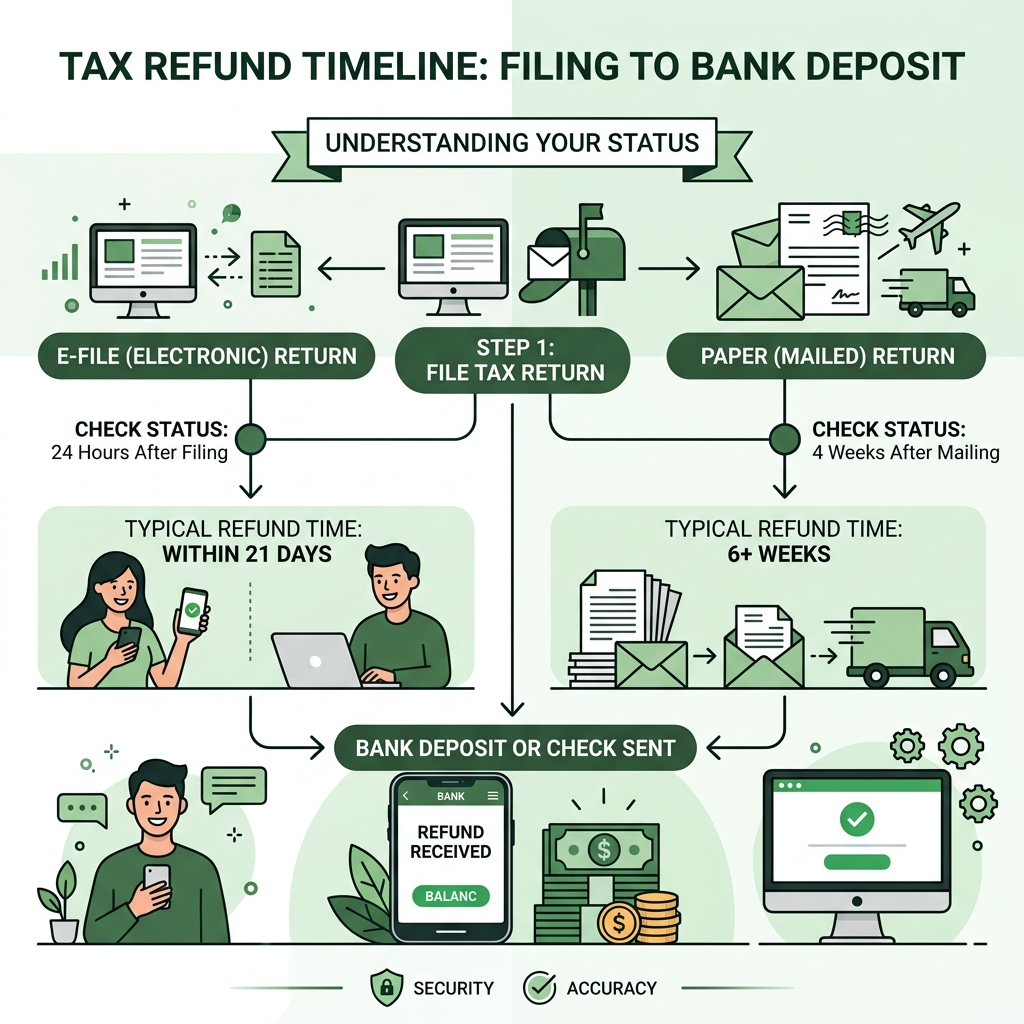
Typical IRS Refund Timeline at a Glance:
| Filing Method | When to Check Status | Typical Refund Time |
|---|---|---|
| E-filed return | 24 hours after filing | Within 21 days |
| Mailed paper return | 4 weeks after filing | 6+ weeks |
| Amended return (1040-X) | 3 weeks after filing | 8-16 weeks |
The most common reasons your refund may be stuck:
- You claimed the Earned Income Tax Credit (EITC) or Additional Child Tax Credit (ACTC) — refunds are held by law until mid-February
- Your return contains errors, missing information, or a signature
- The IRS flagged your return for identity verification
- Your refund is being offset to pay a debt like back child support
- You filed a paper return, which takes significantly longer to process
For most e-filers with direct deposit, the IRS issues refunds in fewer than 21 days. More than 9 out of 10 refunds were issued within that window last tax year.
I’m Santino Battaglieri, and through my work at SFG Capital — where we’ve funded and purchased over $500 million in ERC claims — I’ve seen how frustrating an irs refund still processing status can be, especially when businesses are waiting on capital. In this guide, I’ll walk you through exactly why refunds get stuck and what you can do about it.
Understanding the “IRS Refund Still Processing” Status
When you log into the Where’s My Refund? tool and see that your irs refund still processing, it can feel like your money has vanished into a black hole. In reality, this status simply means the IRS has received your return and is currently working through the verification steps.
The IRS system updates once every 24 hours, usually overnight. If you e-filed a current-year return, you can generally start checking your status just 24 hours after the IRS confirms they’ve accepted it. However, if you e-filed a prior-year return, you’ll need to wait about three days. For those who still prefer the traditional route of mailing a paper return, the wait is much longer—you shouldn’t expect to see any status update for at least four weeks.
It is important to remember that the “still processing” message is a generic placeholder. It covers everything from a return that is sitting in a digital queue to one that has been flagged for a manual review by an IRS employee.
Tracking Your Status When an IRS Refund is Still Processing
To get the most accurate update, you’ll need three specific pieces of information:
- Your Social Security Number (SSN) or Individual Taxpayer Identification Number (ITIN).
- Your exact filing status (Single, Married Filing Jointly, etc.).
- The exact whole-dollar amount of the refund shown on your tax return.

Beyond the website, you can use the IRS2Go app, which offers the same tracking capabilities on your mobile device. One common myth we hear in Travis County is that ordering a tax transcript will somehow “nudge” the IRS or speed up the delivery of your check. Unfortunately, this isn’t true. While an online account is great for viewing your past records, ordering a transcript has zero impact on the processing speed of your current refund.
Common Reasons for Federal Refund Delays
While the IRS aims to issue 90% of refunds within 21 days, several factors can throw a wrench in the gears. If your irs refund still processing status lingers beyond the three-week mark, it’s often due to one of the following “hiccups.”
| Filing Factor | Processing Expectation | Potential Delay |
|---|---|---|
| E-file + Direct Deposit | Under 21 Days | High Accuracy |
| E-file + Paper Check | 3-4 Weeks | Mail Delivery Time |
| Paper File + Direct Deposit | 6-8 Weeks | Manual Data Entry |
| Paper File + Paper Check | 10+ Weeks | Highest Risk of Delay |
One of the most frequent culprits is a simple math error. The IRS system is designed to catch transposition errors or calculation mistakes. If the numbers don’t add up, the return is pulled for manual correction, which adds weeks to the timeline. Similarly, an SSN mismatch—where the name or number provided doesn’t match the Social Security Administration’s database—will cause an immediate halt.
Incomplete forms are another major issue. Forgetting to sign your return (if filing on paper) or leaving off a required schedule is like sending a letter without a stamp. For more detailed insights into these hurdles, you can read about The IRS Waiting Game: Common Reasons for Slow Tax Refunds.
How Errors and Offsets Impact Your Timeline
Sometimes, the delay isn’t about the return itself, but about what you owe elsewhere. The Treasury Offset Program (TOP) allows the government to intercept your refund to pay off “delinquent” debts. This includes:
- Past-due child support.
- Federal agency non-tax debts (like student loans).
- State income tax obligations.
- Unemployment compensation debts.
If your refund is being offset, the IRS will typically process the return, take the portion owed to the other agency, and then issue the remainder to you. You should receive a notice in the mail explaining the adjustment. If you filed a joint return and your spouse is the one with the debt, you may need to file Form 8379 (Injured Spouse Allocation) to protect your portion of the refund.
Why Certain Credits and Forms Trigger Manual Reviews
If you are a parent or a low-to-moderate-income earner, you might find your irs refund still processing for a very specific legal reason. Under the PATH Act, the IRS is legally required to hold refunds for taxpayers claiming certain credits until mid-February. This gives the agency extra time to verify the claims and prevent fraud.
Why Credits Like EITC and ACTC Cause an “IRS Refund Still Processing” Message
The Earned Income Tax Credit (EITC) and the Additional Child Tax Credit (ACTC) are high-value credits that are often targets for identity thieves. Because of this, the IRS cannot release these refunds before February 15, regardless of how early you file.
Most taxpayers who claim these credits and choose direct deposit will see their funds in their bank accounts by March 1. If you check “Where’s My Refund” before mid-February, you will almost certainly see the “still processing” message. This is normal and simply means the IRS is waiting for the legal date to pass before finalizing the payout.
Handling Identity Theft and Audit Holds
In recent years, identity theft filters have become much more aggressive. If the IRS suspects that someone else is trying to file a return in your name, they will freeze the refund and send you a letter—usually Letter 5071C.
When this happens, you must verify your identity with the IRS before they will continue processing your return. This often involves using the ID.me service or calling a specific IRS verification line. Once you verify your identity, it can still take up to nine weeks for the refund to be issued.
If your return is selected for an audit or a “thorough review,” the timeline extends significantly. A standard review can take anywhere from 45 to 180 days. For those in Austin and the surrounding Travis County area dealing with complex business or personal audits, understanding the Need for Speed: Your Guide to Getting a Tax Refund Expedited can be a lifesaver.
Resolving Prior Year Issues and Information Requests
A refund can also be held if you have unfiled returns from previous years. The IRS generally won’t send you new money if they think you might owe them from the past. If you receive a correspondence audit—which is an audit conducted entirely through the mail—be sure to provide the requested documentation by the stated deadline. Missing these deadlines can lead to your refund being “frozen” indefinitely.
Timelines for Amended Returns and Business Credits
If you realized you made a mistake and filed Form 1040-X to amend your return, prepare for a long wait. Amended returns are currently taking an estimated 8 to 16 weeks to process. The “Where’s My Amended Return?” tool won’t even show your status until three weeks after you’ve mailed the form.
For business owners in Travis County, the wait for payroll tax credits like the Employee Retention Credit (ERC) has been even more grueling. Because ERC claims involve filing Form 941-X, they fall into a massive IRS backlog. We’ve seen some business owners waiting over a year for these refunds. To help you navigate this, we’ve put together A Comprehensive Guide to 2026 ERC and 941-X Processing Times.
Frequently Asked Questions
When should I call the IRS about my refund?
You should only call the IRS if:
- It has been more than 21 days since you e-filed.
- It has been more than six weeks since you mailed your paper return.
- The “Where’s My Refund?” tool specifically instructs you to contact the IRS.
Unless you meet these criteria, IRS representatives generally cannot provide any more information than what you see online.
Does ordering a tax transcript speed up my refund?
No. A tax transcript is a record of a tax return that has already been processed or a summary of your account. While it’s helpful for verifying your income for a mortgage or a loan, it does not move your current return through the IRS system any faster.
What is the fastest way to get my refund and avoid delays?
The gold standard for speed is e-filing combined with direct deposit. Ensure you triple-check your bank account and routing numbers. Also, wait until you have all your documents (W-2s, 1099s) before filing; filing too early with estimated numbers often leads to math errors that trigger manual reviews.
Conclusion
Seeing that your irs refund still processing can be stressful, but in most cases, it’s just a matter of time. However, for business owners in Austin and Travis County waiting on significant sums like the Employee Retention Credit, “just a matter of time” can mean months of lost opportunity.
At SFG Capital, we specialize in helping businesses bypass these IRS delays. We offer ERC advances and buyouts, providing you with quick access to the funds you’ve already earned. Our process involves expert claim assistance and a performance-based fee, so you don’t have to worry about upfront costs. If your business is tired of the waiting game, we invite you to explore our Employee Retention Credit Help and see how we can get your capital working for you today.